Still.nest
Material Research for Acoustic Privacy: microcemento and wood-wool combined
00
challenge
Microcemento is used almost exclusively as a surface coating — thin, flat, purely decorative. Sika asked a different question: what else could it become? The brief was open — give microcemento new form and new function for indoor use. The design question became: what happens when you push a material beyond its conventional application?
solution
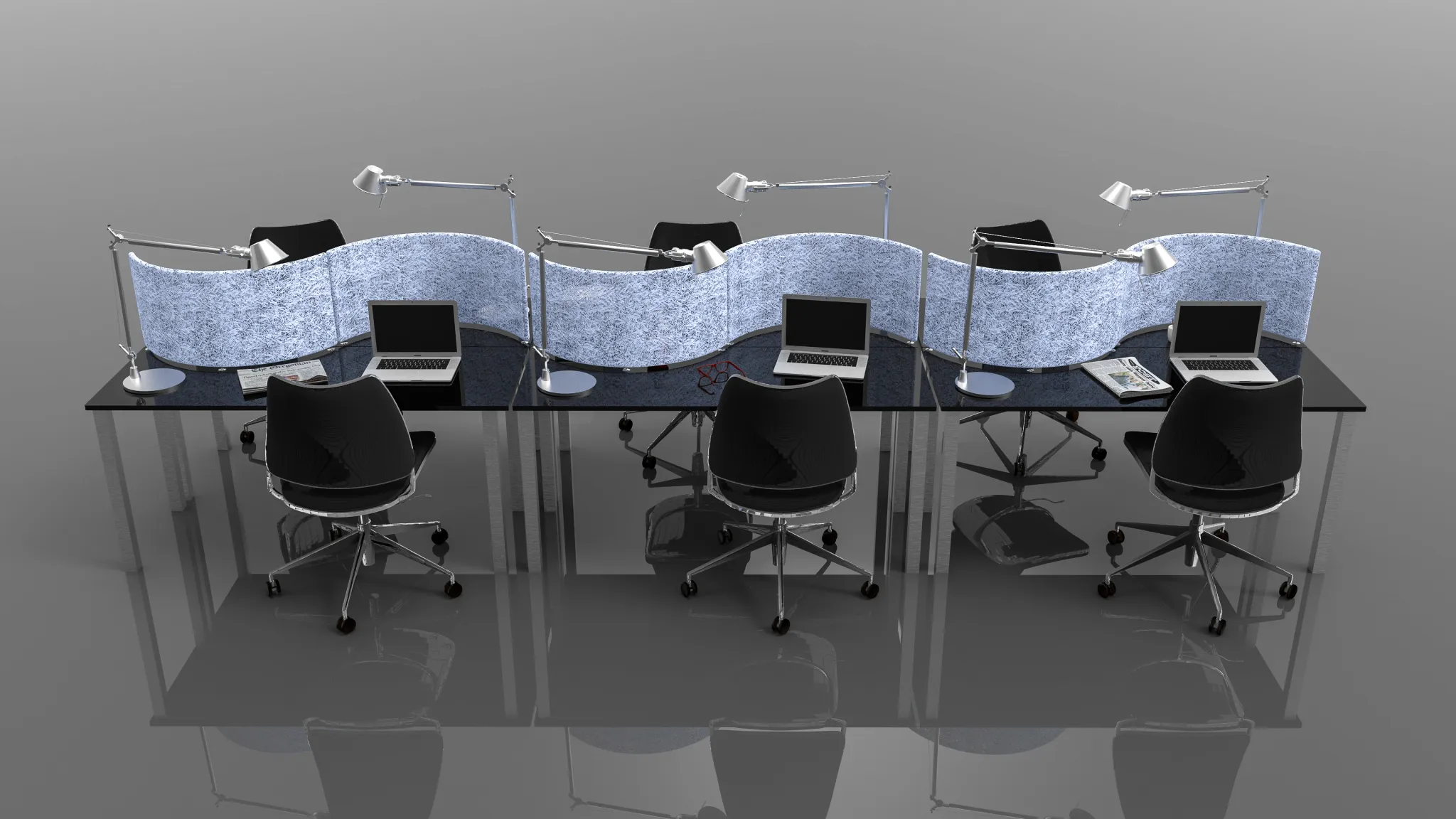
A modular desk divider for co-working spaces built from a compound of microcemento and wood-wool — a combination discovered through hands-on experimentation. The compound gives the material structural volume, a naturally porous texture and unexpected sound-absorbing properties. The divider's curvature embraces the user, creating acoustic and visual privacy without isolating. Magnetic attachment points embedded directly in the matrix allow users to personalise their workstation.
Still.nest demonstrated that material innovation begins with physical experimentation, not assumptions. A transferable model: push constraints, test combinations, let unexpected properties generate new design directions. In co-working environments where the user shares the space with others, the ability to make a workstation feel personally owned is not decorative — it is psychological.
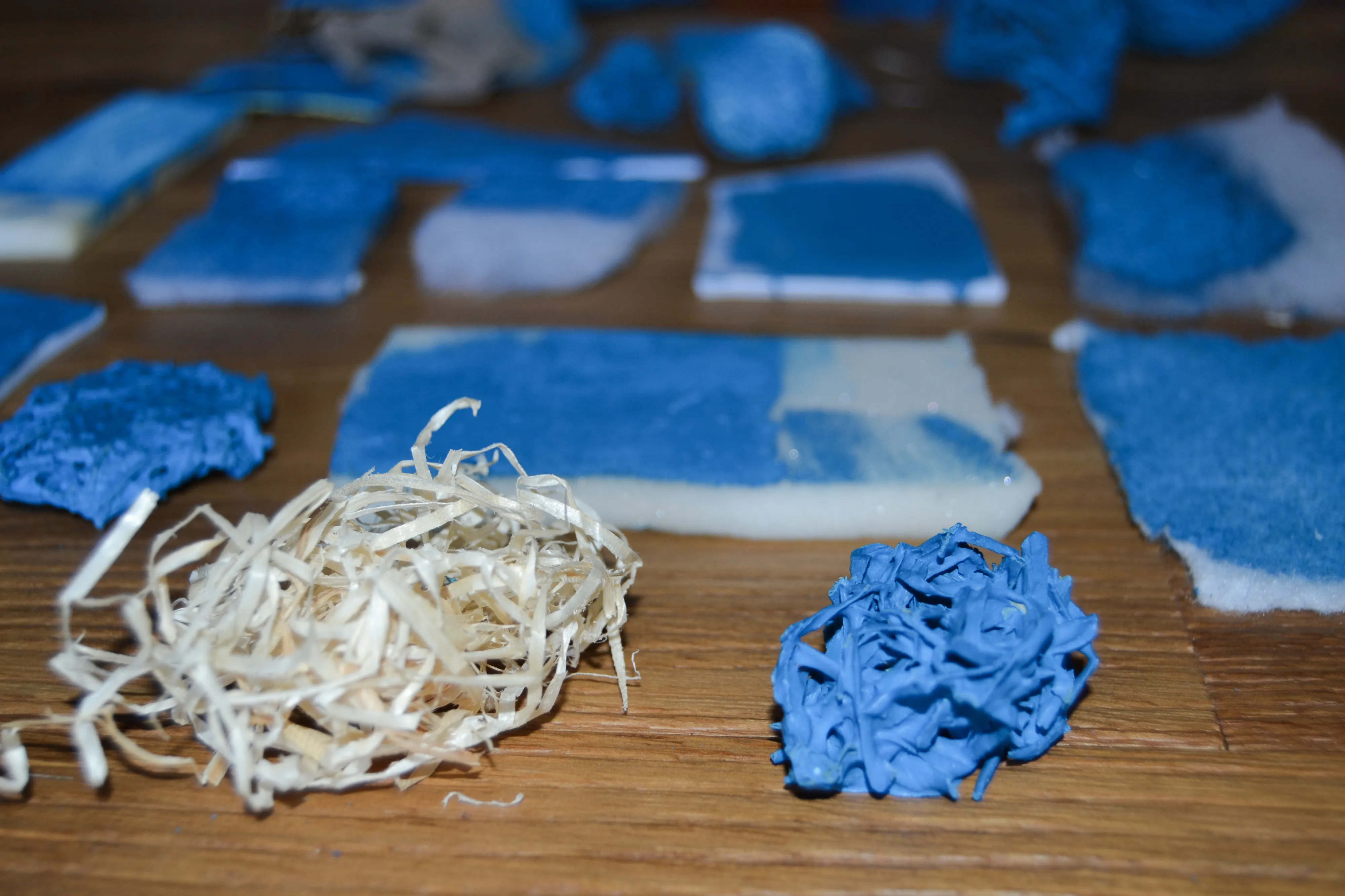
The discovery of sound-absorbing properties in the microcemento and wood-wool compound was not planned — it emerged from the process. The prototype was cast in reinforced microcemento with wood-wool fibres, poured into a polystyrene mould and left to cure in position. Technical components — adjustable foot inserts and magnetic attachment points — were embedded directly into the matrix during casting, exploiting the material's own process as an integration mechanism. The texture created by wood-wool fibres within the cement matrix became both the functional and aesthetic signature of the project.
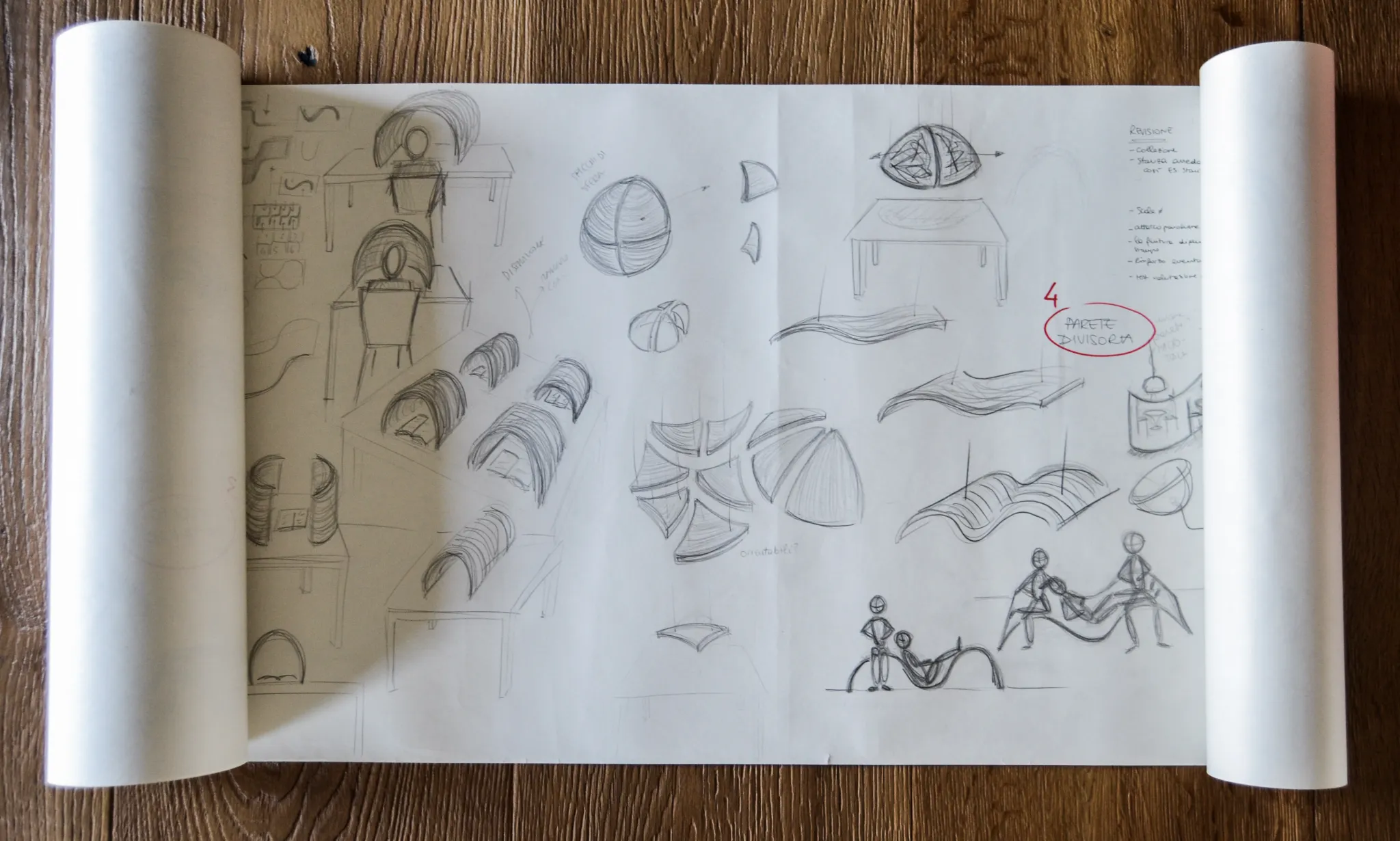
The curvature of the module was designed to embrace the user — conveying protection and enclosure, like a nest — with the material's natural texture amplifying the tactile quality of the object. The play of transparency in the porous surface offers privacy without creating isolation. Modularity allows stacking and configuration; magnetism allows personalisation.
01
Research
Understanding what microcemento actually is
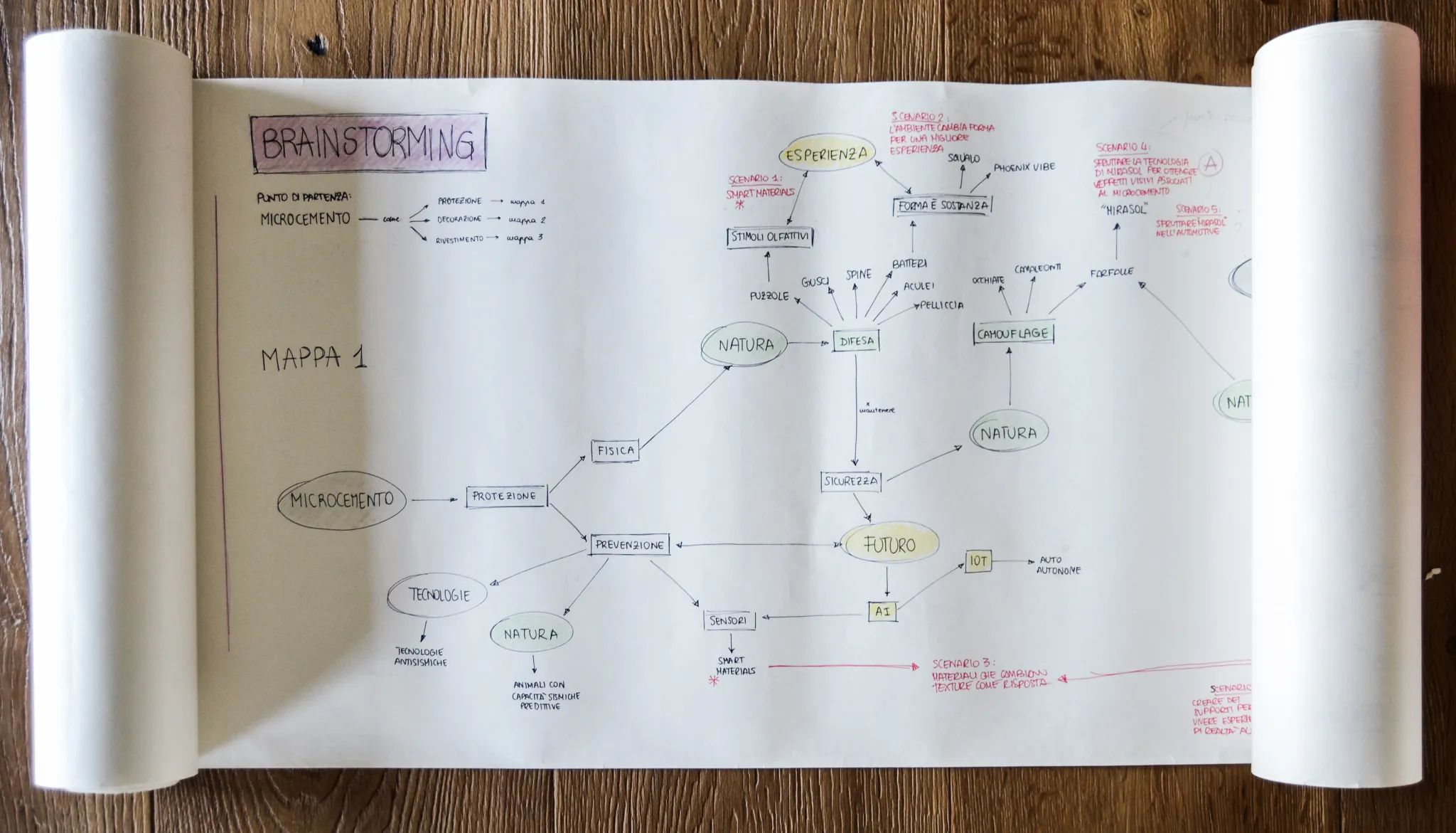
Analysis of Sika's identity, production processes and material portfolio. In-depth study of microcemento — its mechanical properties, application methods and current limitations. Parallel research on innovative materials, indoor trends and the future of co-working environments as a dominant spatial scenario.
02
Experimentation
The compound that changed everything
Physical experimentation combining microcemento with multiple materials to improve mechanical properties and expand potential applications. Wood-wool emerged as the most promising combination — structurally resistant, visually distinctive and, unexpectedly, sound-absorbing. That discovery redirected the entire project.
03
Concept
Privacy without isolation
The sound-absorbing properties of the compound pointed directly to co-working environments, where users need acoustic and visual privacy without full separation. The curvature was designed to embrace — conveying protection and enclosure, like a nest. The porous texture offers privacy without walls.
04
Technical Development
Engineering what the material allows
Prototype cast in a polystyrene mould, components embedded directly into the matrix during casting. Adjustable foot inserts and magnetic attachment points integrated without additional assembly. The material's own process became the construction mechanism.
year
2019
Client
Academic project - Sika


see also