Emotion Wall
A real-time emotional monitoring system for astronauts in isolated and extreme environments
00

challenge
In space missions and analogue simulations, the emotional dimension of the crew is systematically neglected. Astronauts rarely disclose psychological distress, and traditional monitoring methods are perceived as intrusive. How do you monitor what people won't tell you?
solution
A collective emotional monitoring system tested during EMMPOL 8, a seven-day analogue mission in Poland. Crew members select their emotional state every four hours — data is anonymised and visualised as a fluid colour-area graphic projected in the living space. Individual data stays private. The crew sees only the collective result.
A seven-day isolation mission in Poland. No sunlight, no outside world. A tool designed to make the emotional climate of the group visible — without forcing anyone to speak. The finding pointed somewhere unexpected: in constrained environments, psychological monitoring doesn't slow operations down. It makes them possible.
The Emotion Wall translates emotional states into a shared visual field. Every four hours, each crew member selects their current emotional state from a palette of seven emotions — mapped through nine cross-cultural studies across 23 countries. Individual responses stay private. What the crew sees is only the collective result: a fluid colour-area graphic projected in the living space, where larger areas represent more intensely felt emotions. A way to make the psychological climate of the group visible — without forcing anyone to speak.
The first critical design decision: individual tool or collective one? The individual version was safer and less invasive. But it would have missed the core opportunity — making the emotional climate of the group visible to itself. The decision to proceed with the collective model, with strict anonymisation built in from the start, was the defining choice of the project
01
Research
The emotional gap in space missions
Literature review on psychological stressors in confined environments. Finding: emotional data is rarely collected systematically, and when it is, methods are perceived as invasive. Parallel research on sensory deprivation across polar stations, submarines, space missions and pandemic isolation studies.
02
Design
From emotions to colours, from colours to awareness
The challenge was translating something invisible — emotional states — into something immediately readable by an entire crew. Seven emotions were selected and each mapped to a colour, drawing on cross-cultural research across 23 countries to ensure the palette worked beyond language and culture. The interaction had to be fast enough not to feel like monitoring: under sixty seconds, twice a day. Individual responses stay private — only the collective result is visible.
03
Field Validation
EMMPOL 8, Poland
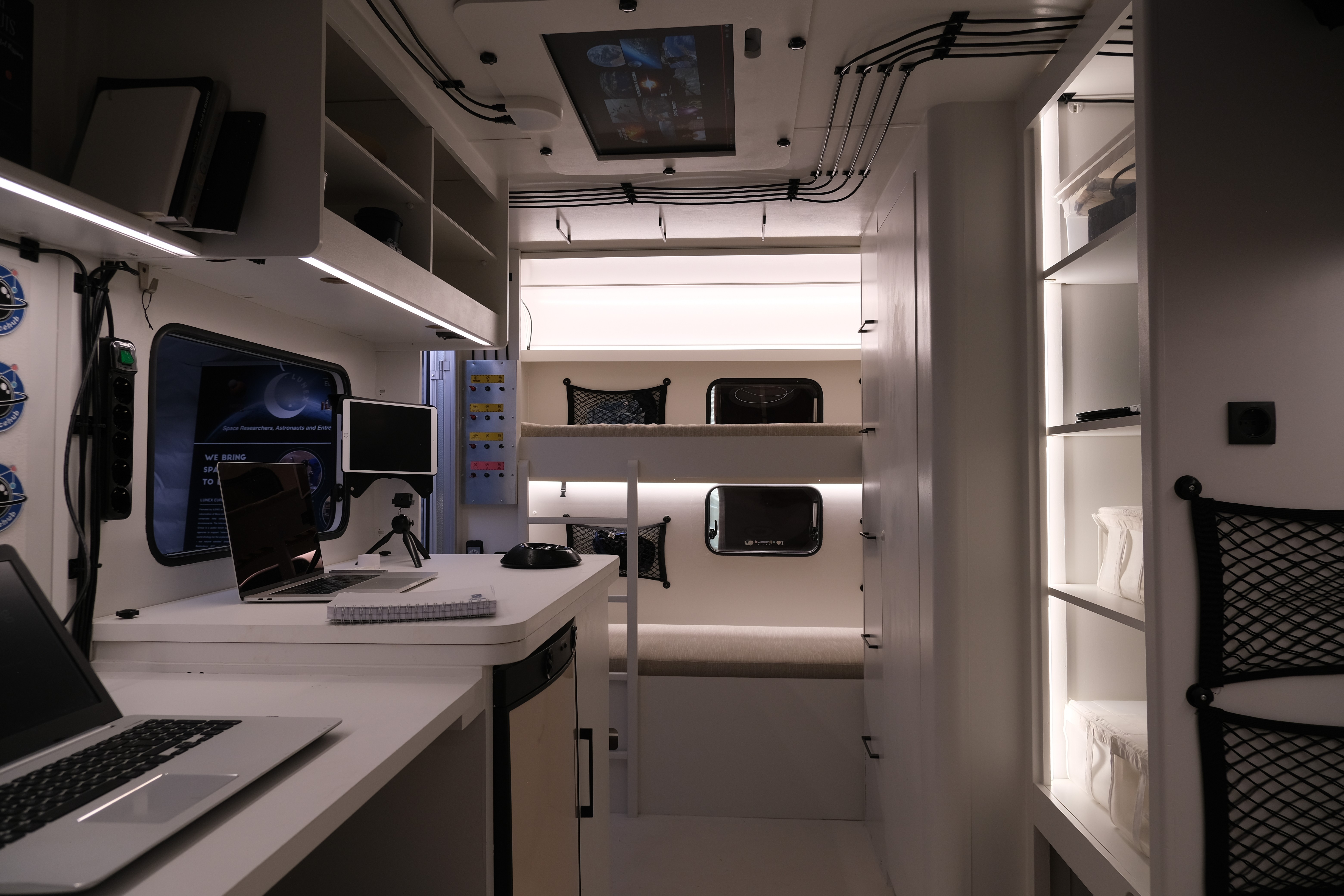
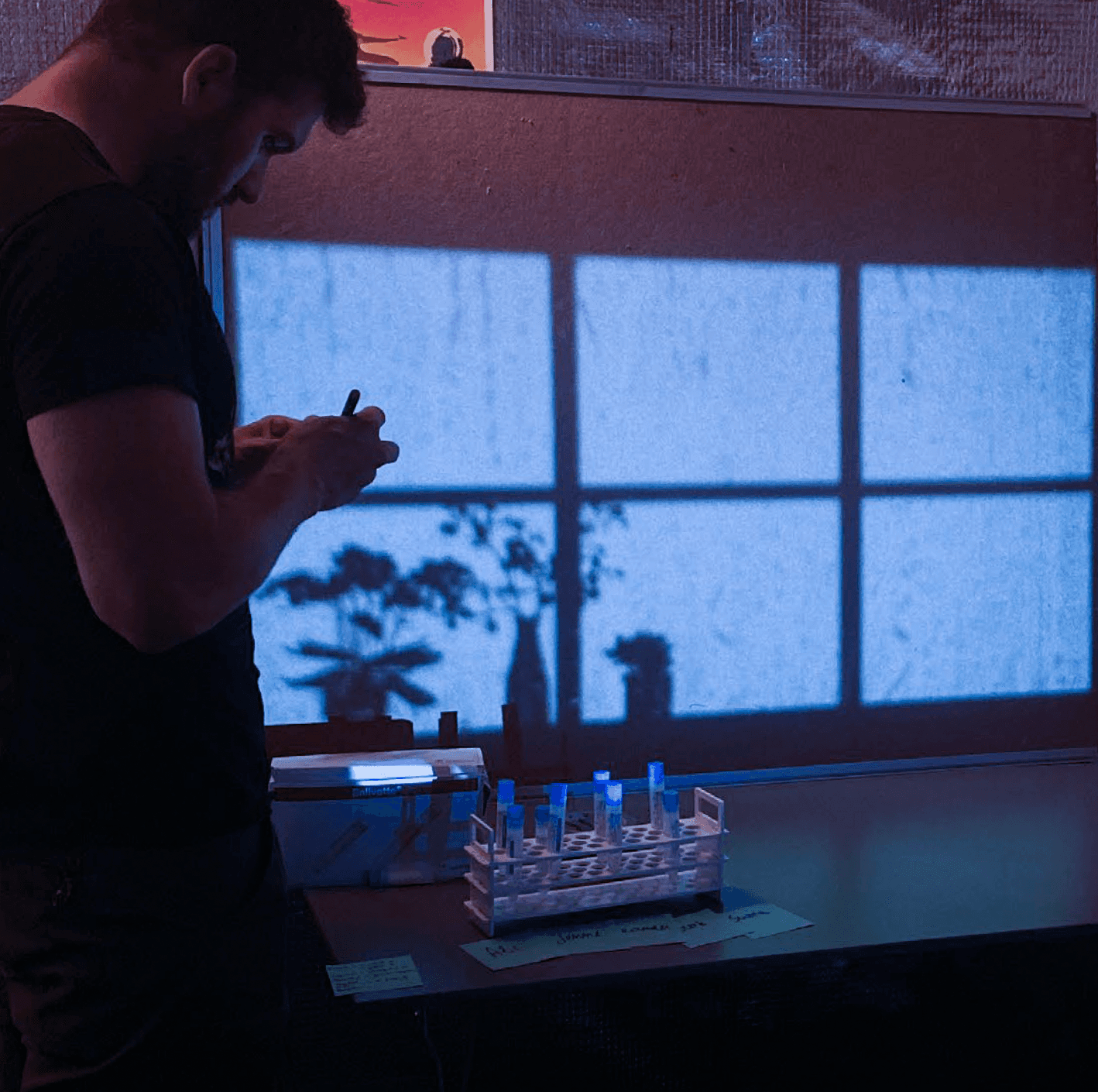
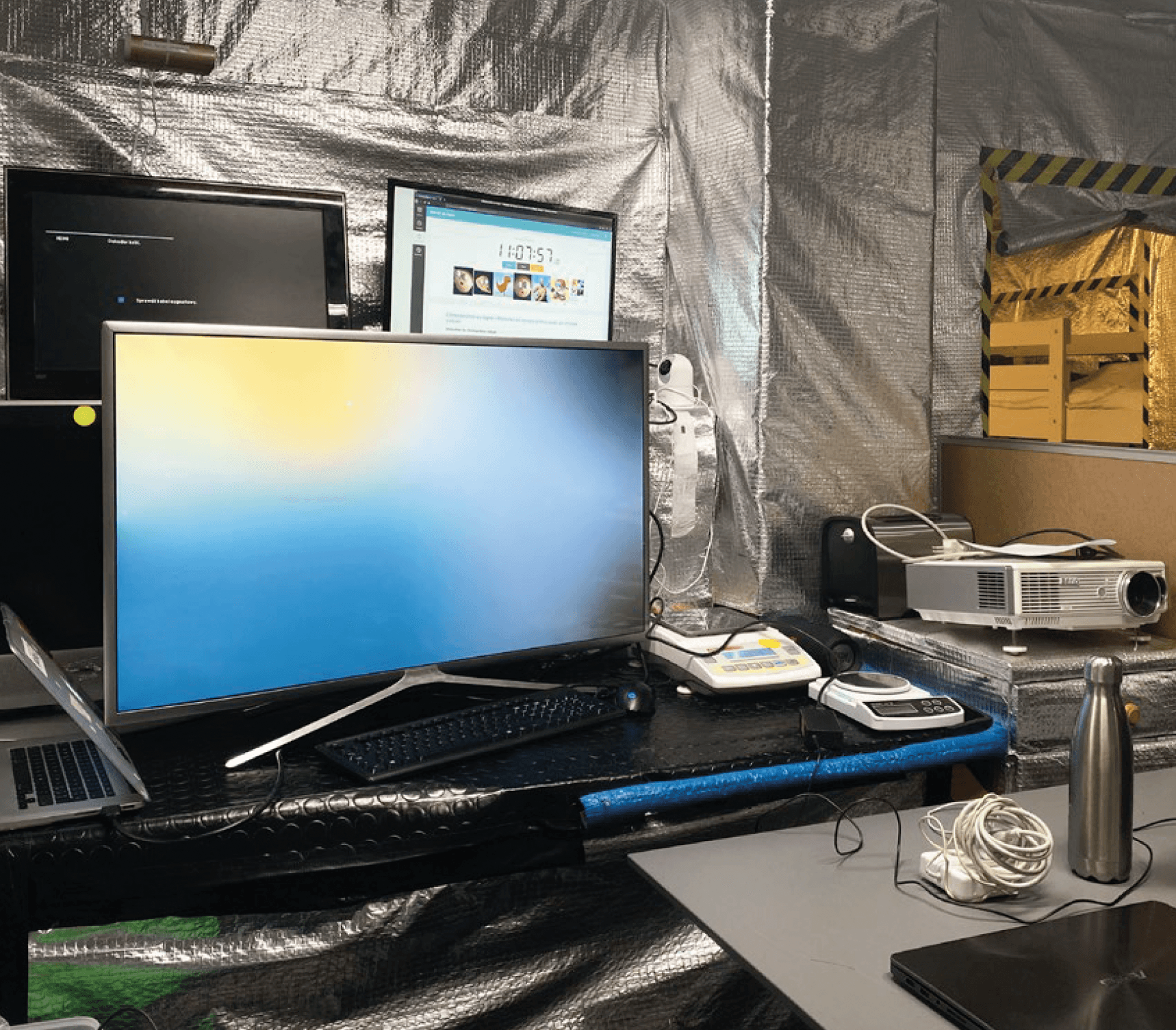
Seven-day total isolation mission. No natural sunlight. The gap between design and reality was immediate — equipment had to be adapted and reconfigured with whatever was available on site. Real field research is not a lab. The constraints forced prioritisation, and prioritisation generated findings a controlled setting would never have produced.
04
Results
What the mission taught us
Emotion Wall adopted spontaneously as starting point for evening debriefing from day two. Happiness most frequently selected, followed by calmness. Key finding: structured emotional awareness under operational pressure does not slow things down — it keeps people functional.
year
2021
Client
Politecnico di Milano, Thesis Research


see also