Kokono
A personal multisensory cocoon for physical restoration and psychological recovery aboard the ISS
00
challenge
Astronauts aboard the ISS have no privacy, no personal space, no moment of true disconnection from operational duties. Existing exercise equipment addressed physical performance — but ignored psychological wellbeing. The question was not "how do astronauts stay fit?" but "how do astronauts stay human?"
solution
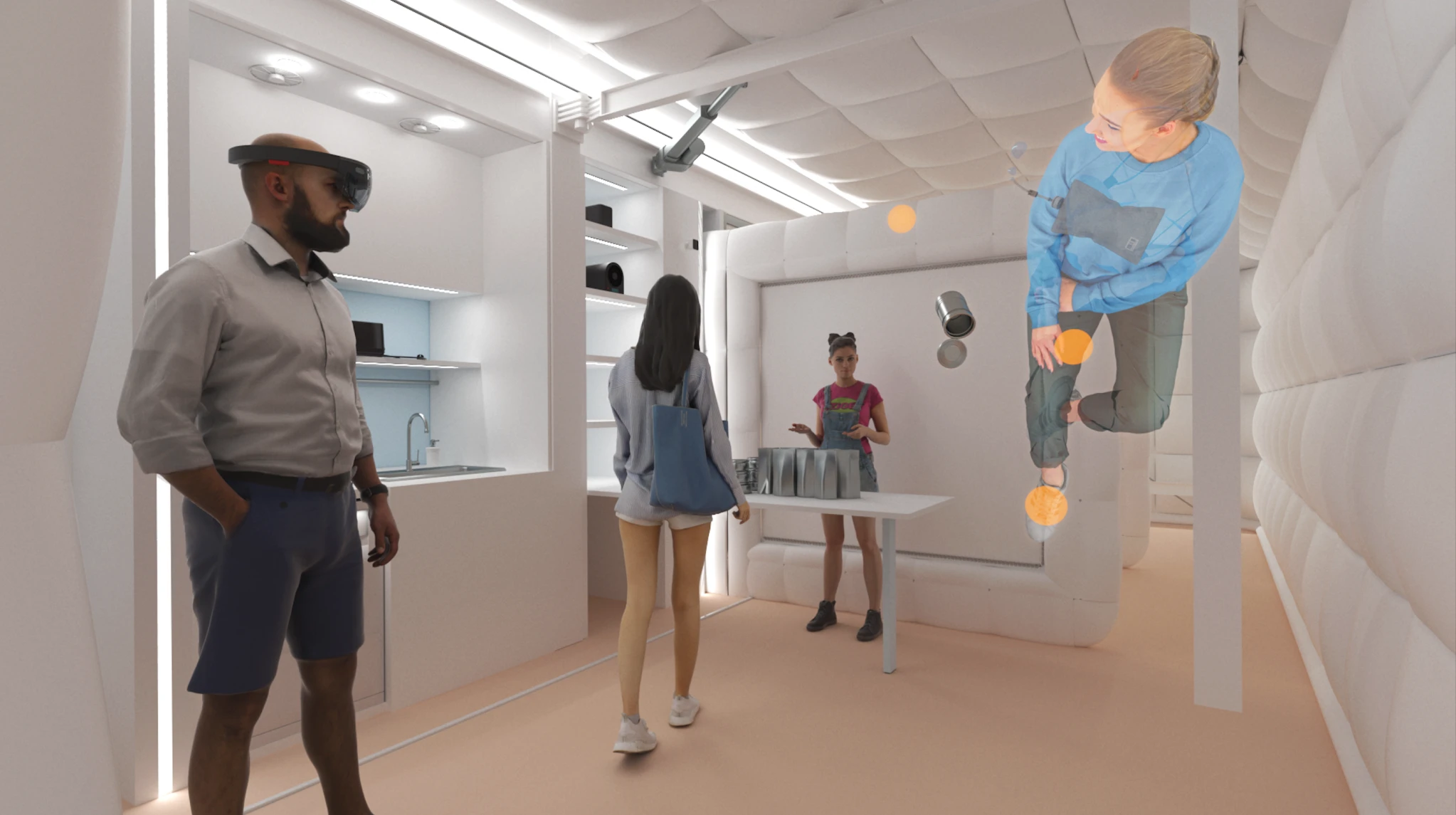
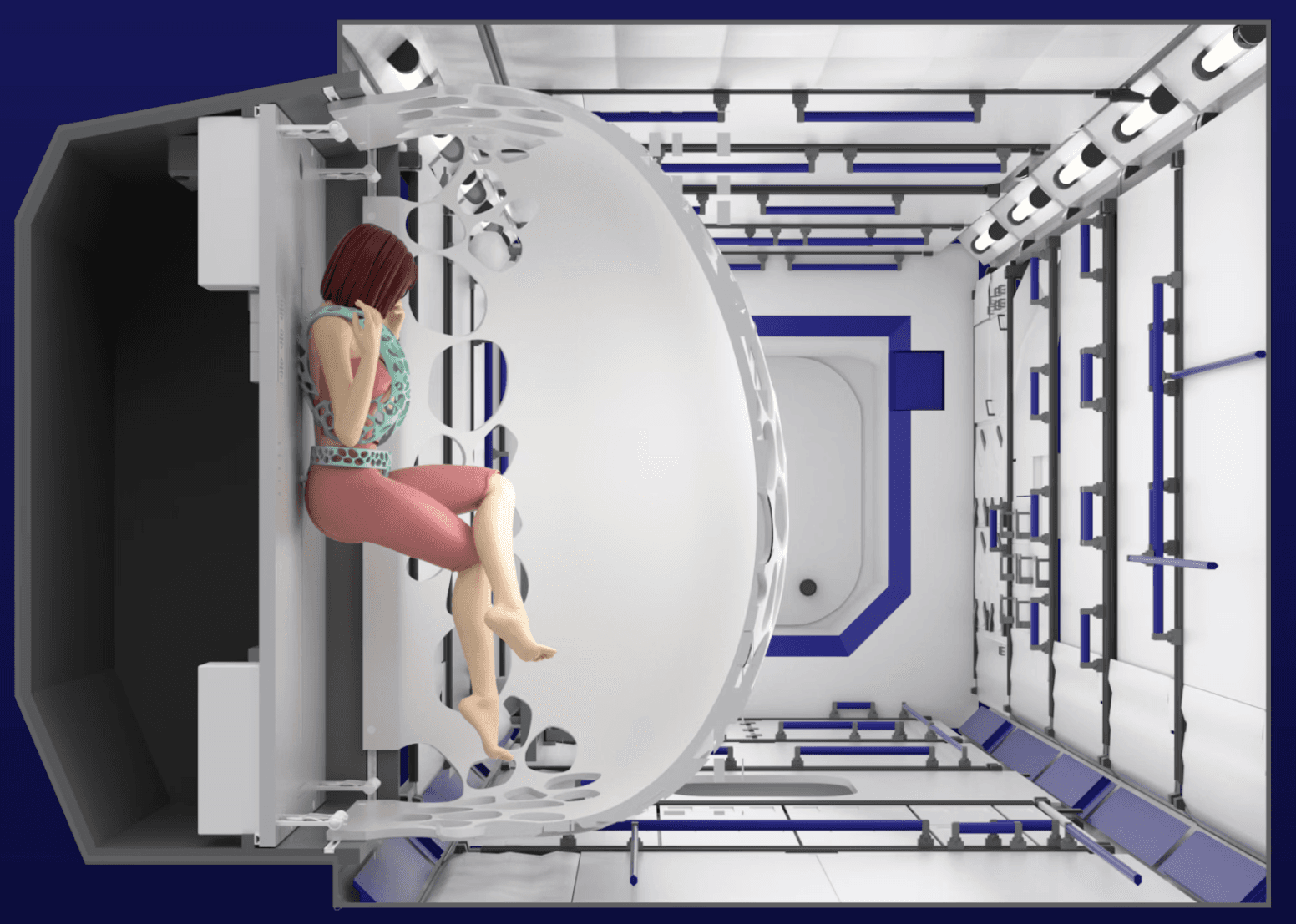
An inflatable personal cocoon fitting inside a standard ISS rack. Once inflated, it creates a private, soundproofed, multisensory space for reformer pilates, proprioception exercises, yoga breathing and relaxation — guided by a VR projector, haptic feedback handles and customisable sensory environments. The bubble's exterior shifts colour with the time of day and flashes red in emergencies.
Microgravity is usually seen as a constraint. Kokono reframed it as a design opportunity — pilates and yoga work with bodyweight and resistance, not against gravity. The project demonstrated that sport can function as a vector for psychological restoration, not just physical maintenance. A model applicable to workplace wellbeing, healthcare facilities and any environment where individuals need to recover a sense of self within limited space.

Kokono supports four modes: Pilates, Proprioception + VR, Yoga Breathing and Relax. Each engages five sensory dimensions — visual, auditory, haptic, olfactory and chromatic — coordinated through a single controller. The double-wall inflatable structure uses a 3D-printed reticular organic texture that simultaneously manages airflow, absorbs sound and serves as a projection surface for the VR system.
The name comes from Esperanto — meaning cocoon. The choice of Esperanto was deliberate: Space creates bonds that transcend borders, and a language designed to belong to everyone felt like the right anchor for a product designed to give everyone their own space.
01
Research
The body in microgravity
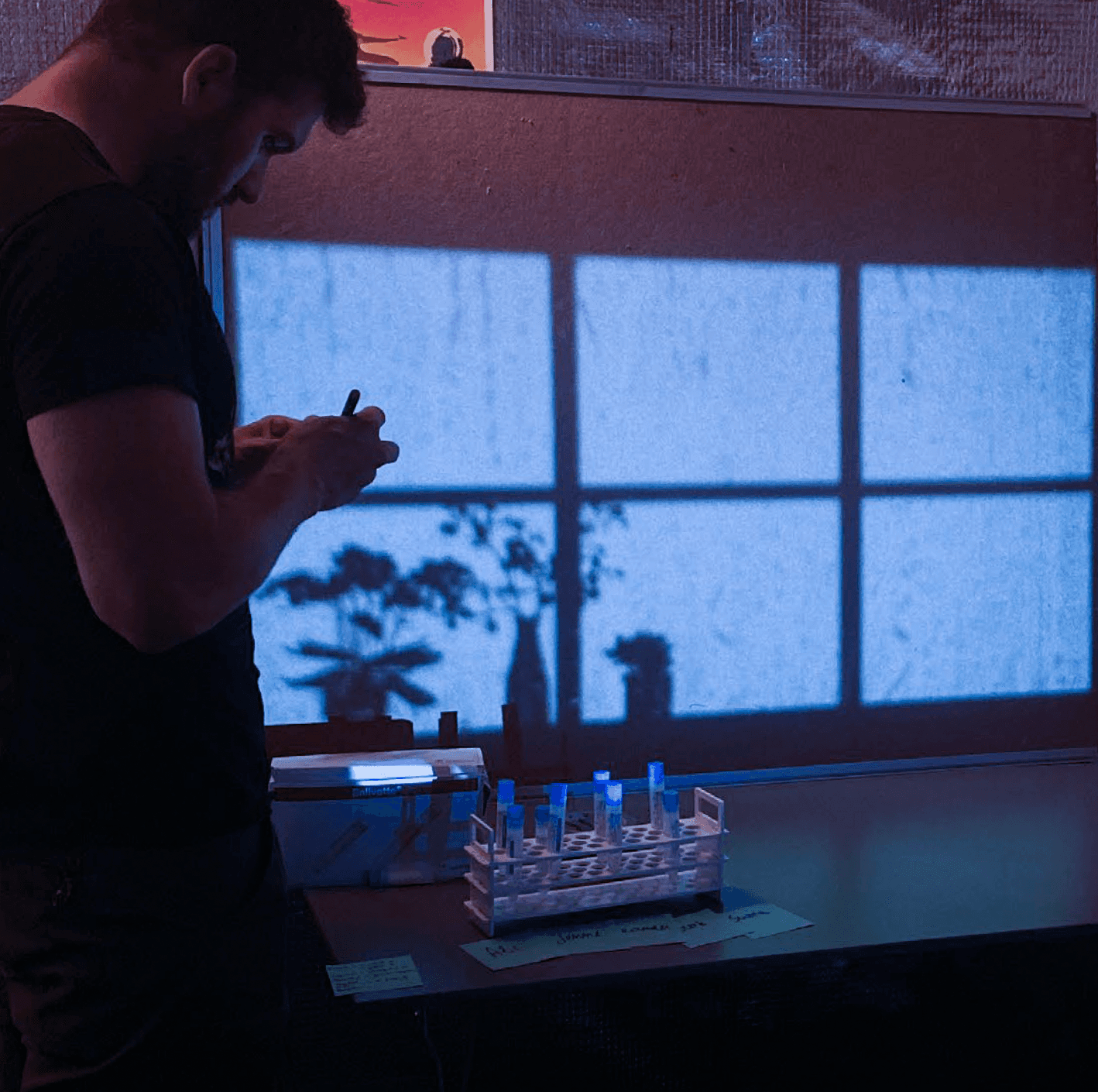
The starting point was not exercise equipment — it was the experience of living without gravity. Literature review on sport and microgravity, psychological challenges of long-duration missions, and direct consultation with an ESA expert trainer revealed something unexpected: microgravity is not only a physical problem. It is perceptual and psychological. The body loses its sense of itself.
02
Brainstorming
From performance to experience
Dozens of directions explored — from 3D coordination games to wearable lights. The key shift came early: stop thinking about sport as a countermeasure and start thinking about it as a personal moment. Happy astronauts perform better. The brief expanded from physical exercise to sensory experience, privacy and psychological restoration.
03
The decisive reframe
Sport as restoration, not maintenance
The shift that unlocked the concept: stop thinking about exercise as a physical countermeasure and start thinking about it as a personal moment. Every other aspect of life aboard the ISS is shared, monitored, operational. Sport could be different — a moment that belongs entirely to the astronaut. From that reframe, the brief expanded beyond physical performance into sensory experience, privacy and psychological restoration. The cocoon was the answer: a space within the space, where the body and mind could both recover.
04
Experience design
Four modes, one cocoon
Inside Kokono, four modes guide the experience: Pilates, Proprioception + VR, Yoga Breathing and Relax. Each combines five sensory dimensions — visual, auditory, haptic, olfactory and chromatic — coordinated through a single controller. The VR projector immerses the astronaut in natural environments. The haptic handles provide physical feedback during movement. The scent system and ambient sound complete the sensory field. Outside, the bubble's skin shifts colour with the time of day to support the circadian rhythms of the entire crew — and flashes red in emergencies.
year
2020
Client
Academic project - ESA, Technogym, Politecnico di Milano


see also