Ray
A lighting system that brings natural light back into the ISS through simulated sunlight, weather atmospheres and shadow play
00

challenge
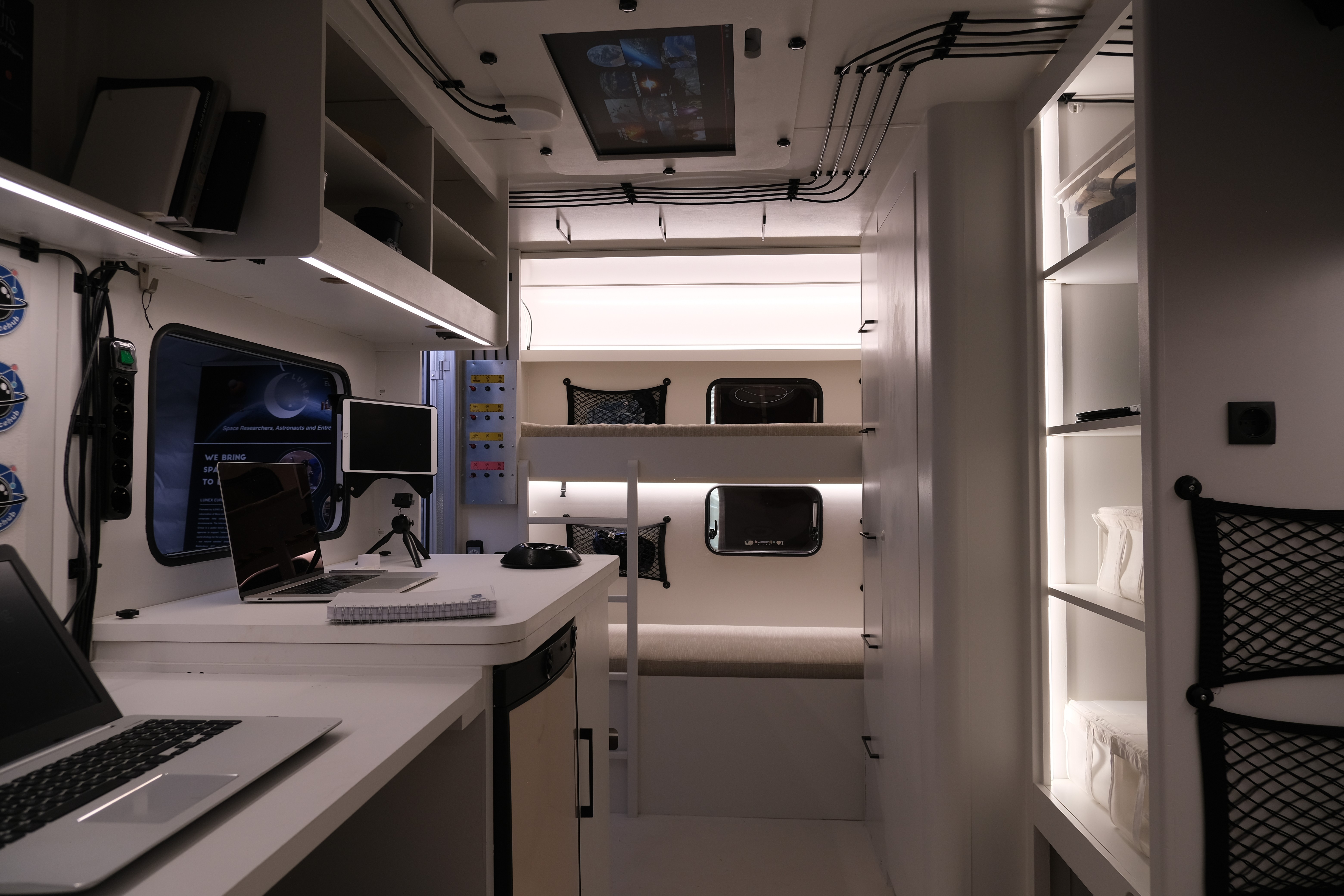
Astronauts aboard the ISS live without natural light cycles. Existing lighting was designed for task visibility — not for wellbeing. The result: disrupted circadian rhythms, reduced cognitive performance, sensory disconnection from Earth. How do you design an environment that makes people feel alive when everything natural has been removed?
solution
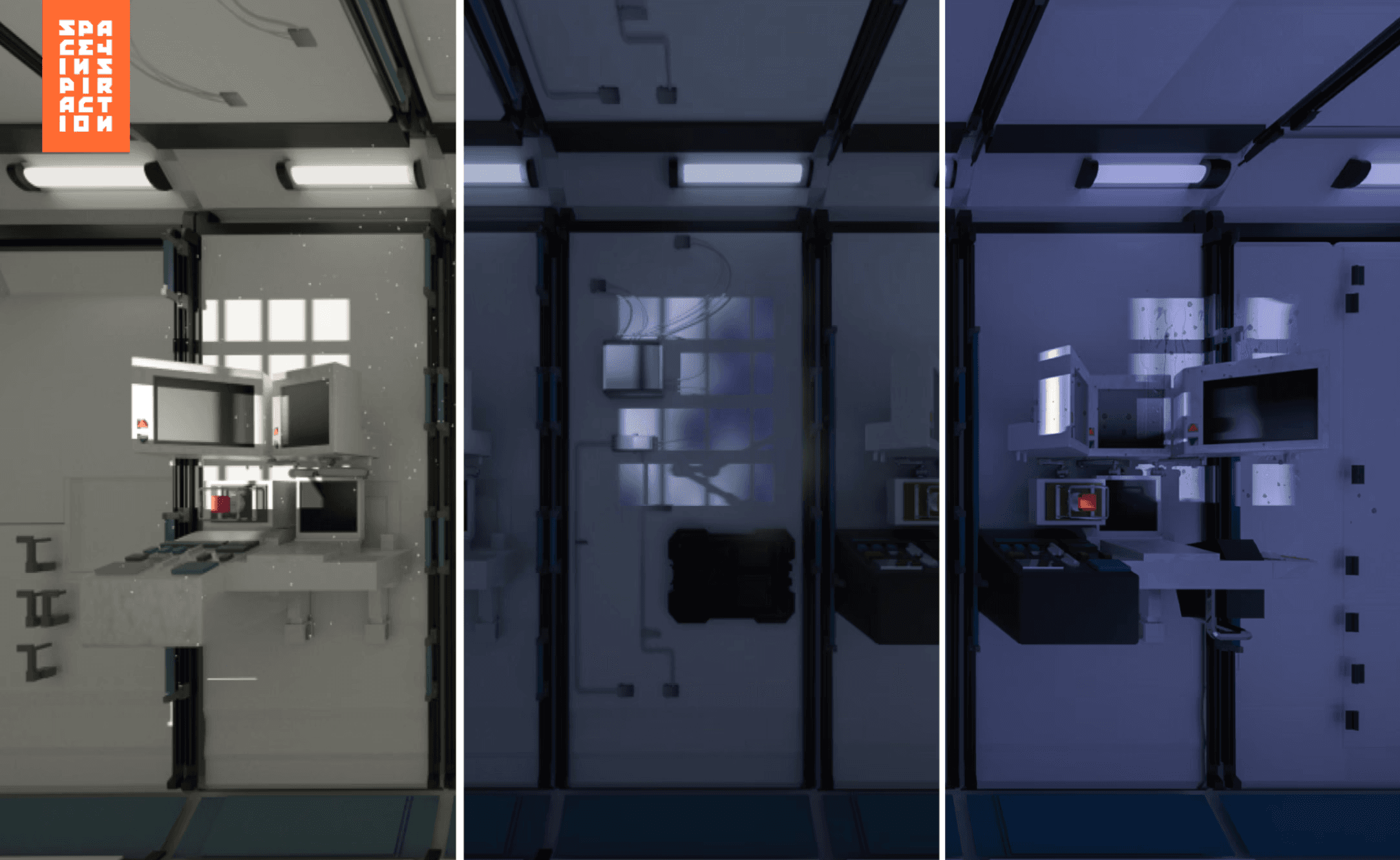
Creating the illusion of a window where none exists. Six presets combine light temperature, intensity and sound: Sunny, Rainy, Cloudy, Underwater, Storm, Komorebi. One switch. A complete sensory atmosphere.
The most powerful tool against confinement is not more space — it is the feeling of openness. Ray shows how cultural intelligence, not just technical optimisation, can solve measurable human problems in extreme environments. A framework for sensory intervention under deprivation — applicable to healthcare facilities, urban micro-housing, mobility systems and any context where designed environments must compensate for the absence of natural stimuli.
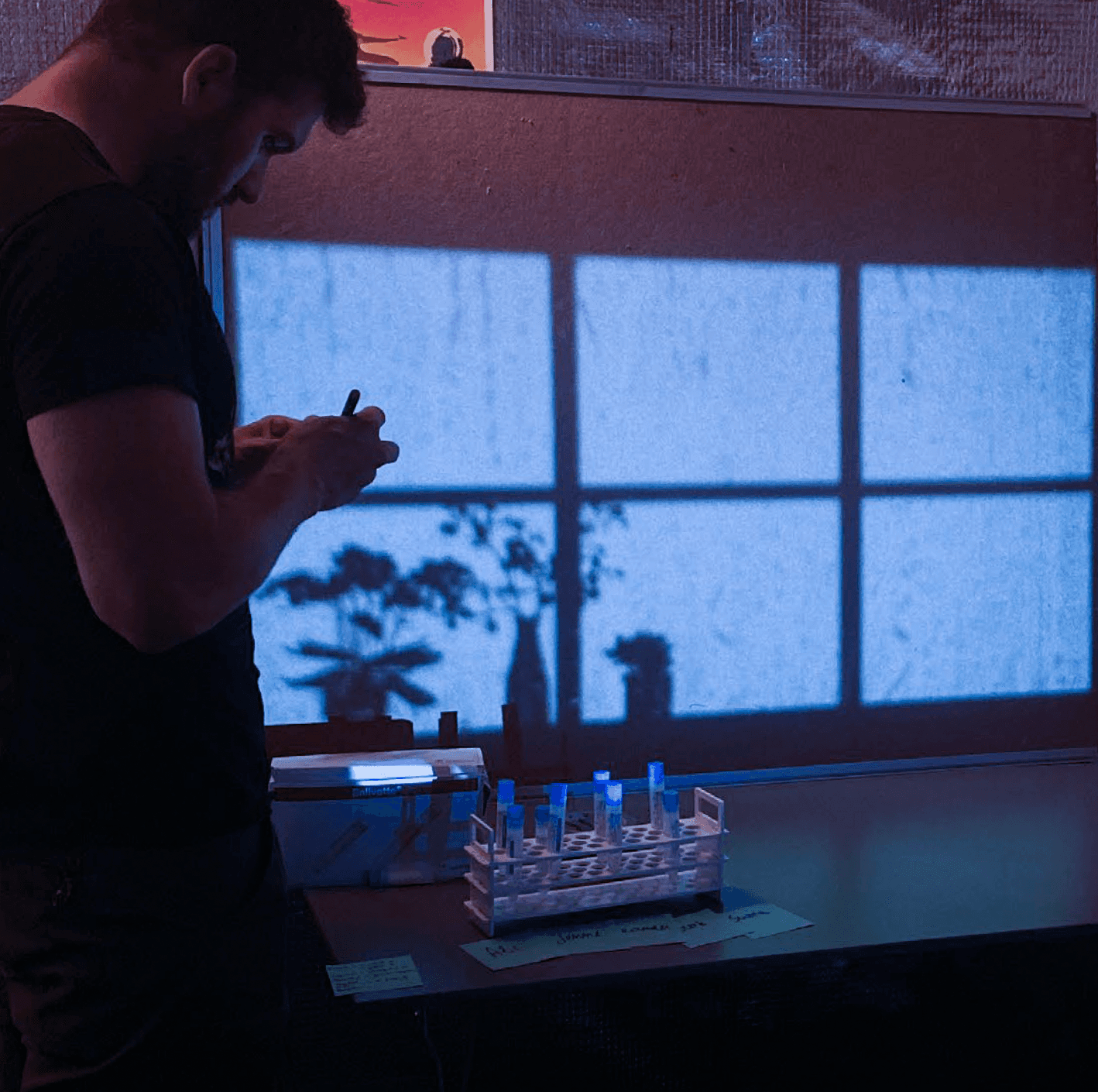
The concept came from an unexpected place: Caravaggio's The Calling of Saint Matthew (1599–1600). Sharp light entering from an invisible window, transforming space and people. Light not as illumination but as presence, connection, illusion of openness. The shadow cast by an unseen window is more emotionally resonant than the window itself — and that insight became the entire design direction.
Six presets were designed to cover the full range of natural atmospheres: Sunny, Rainy, Cloudy, Underwater, Storm, Komorebi. Each combines light temperature, intensity and ambient sound. One switch selects presets and doubles as speaker. The cylinder rotates against a fixed OLED strip — recreating the dynamic, shifting quality of natural sunlight across surfaces.
01
Brief & Brainstorming
What can light actually do?
The starting point was not "how do we light the ISS better" but "what does light do to people?" Mapping all possible functions of light — atmospheric, psychological, symbolic, spatial — revealed that ISS lighting addressed only one: task visibility. Everything else had been ignored. Six directions explored, from wearable lights to floating luminous elements.
02
Concept
The shadow of an unseen window
The strongest direction was the most unexpected: not light itself, but the shadow it casts. A shadow implies a window. A window implies an outside world. The concept locked in around that insight — and found its cultural reference in Caravaggio's The Calling of Saint Matthew: sharp light entering from an invisible source, transforming the space and everyone in it.
03
Technical Development
Making the Earth move
A cylindrical mask rotates against a fixed OLED strip — two precision-cut openings, one generating the Komorebi shadow pattern, one generating a window shadow. The rotation recreates what makes natural light feel alive: it moves. It changes. It marks time passing.
04
Experience Design
One switch, six worlds
Six presets — Sunny, Rainy, Cloudy, Underwater, Storm, Komorebi — each combining light temperature, intensity and ambient sound. One switch selects and doubles as speaker. The complexity is invisible. What remains is the atmosphere.
year
2020
Client
Academic project - Politecnico di Milano, European Space Agenct


see also