Multisensory Scenarios
Sensory interventions designed to bring the outside world into confined habitats
00
challenge
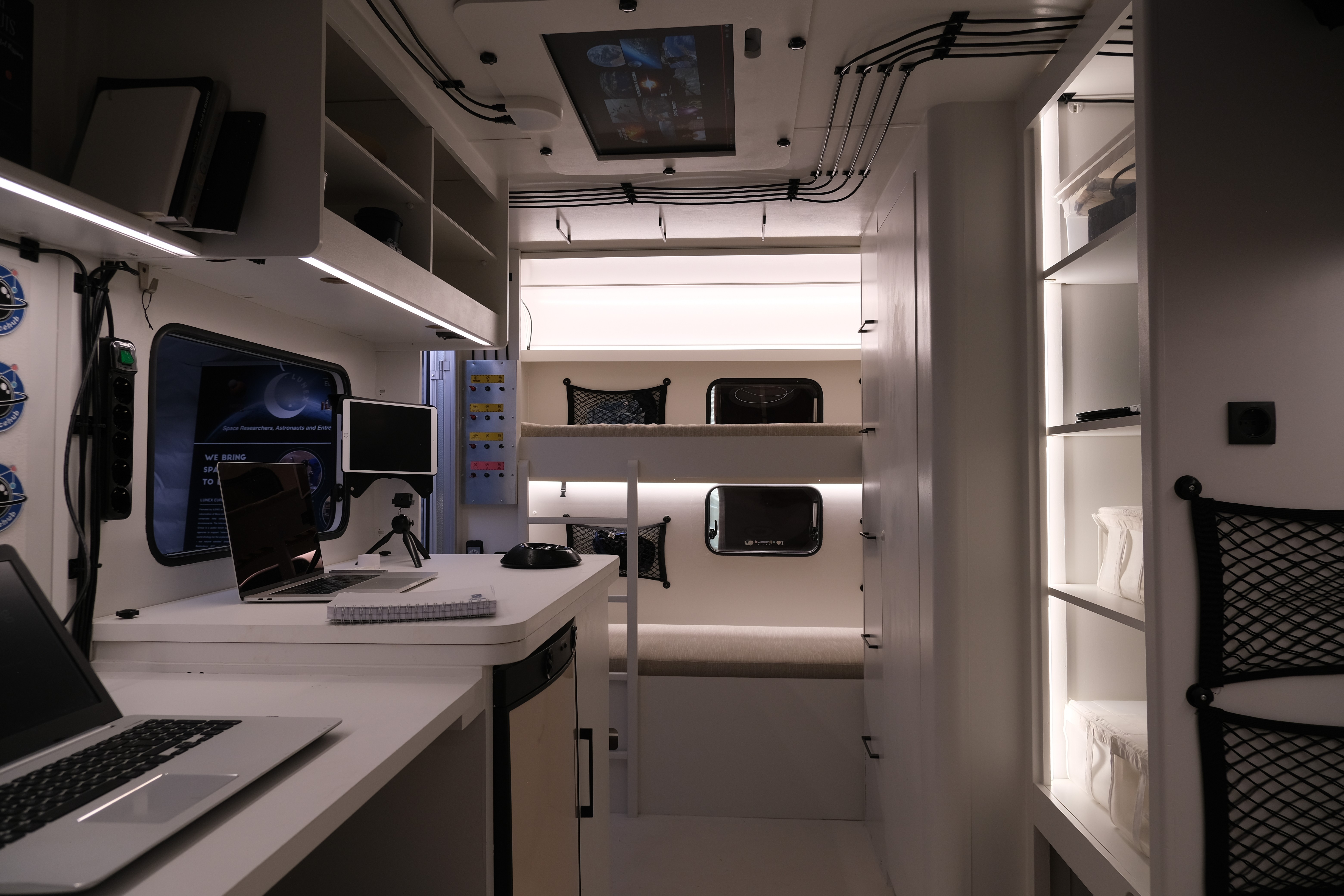
Analogue missions are Earth-based simulations of space living conditions — total isolation, no natural light, no contact with the outside world. In these environments, the absence of natural stimuli causes measurable deterioration in mood, focus and group cohesion. How do you bring the outside world into a place with no outside?
solution
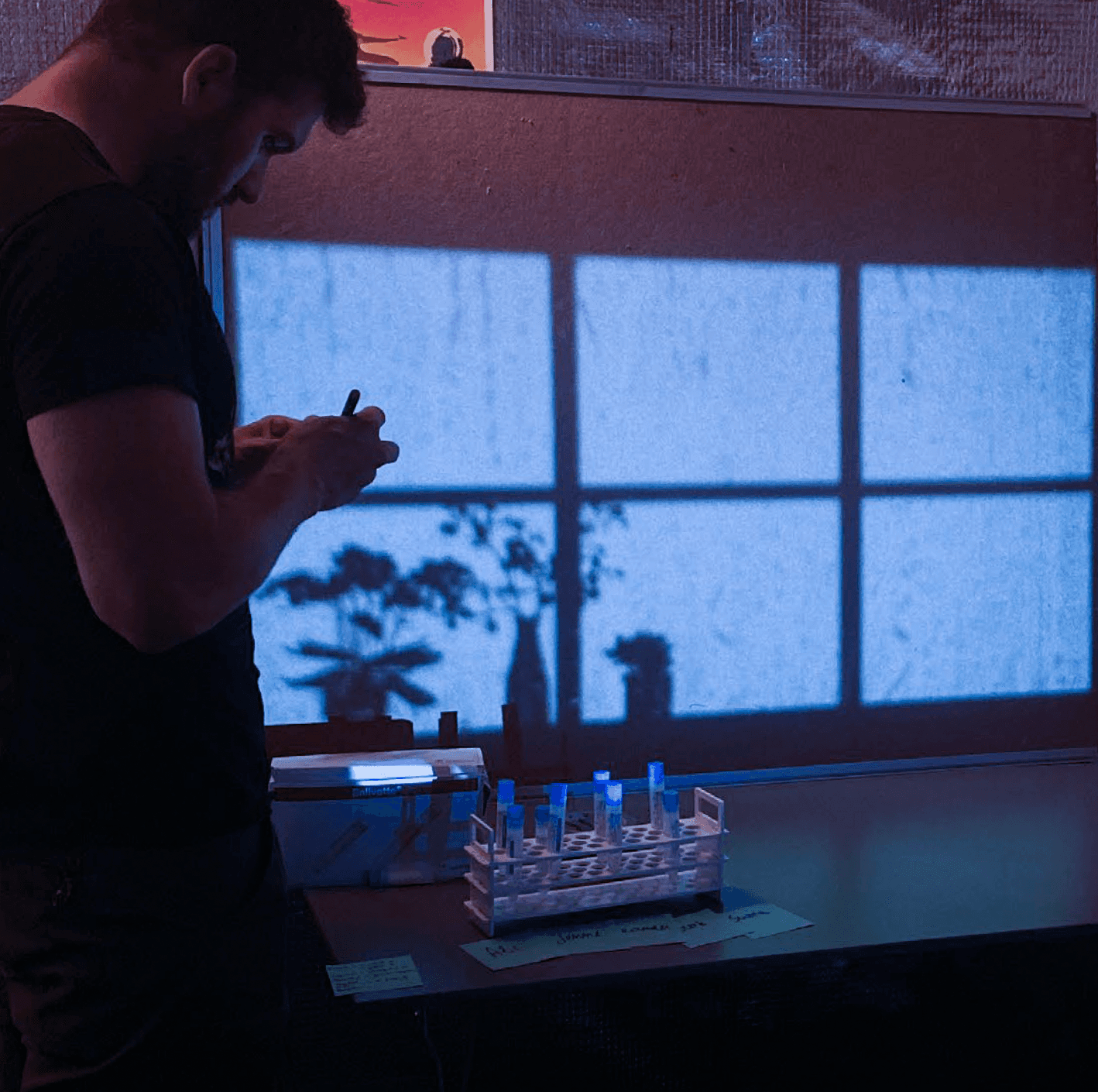
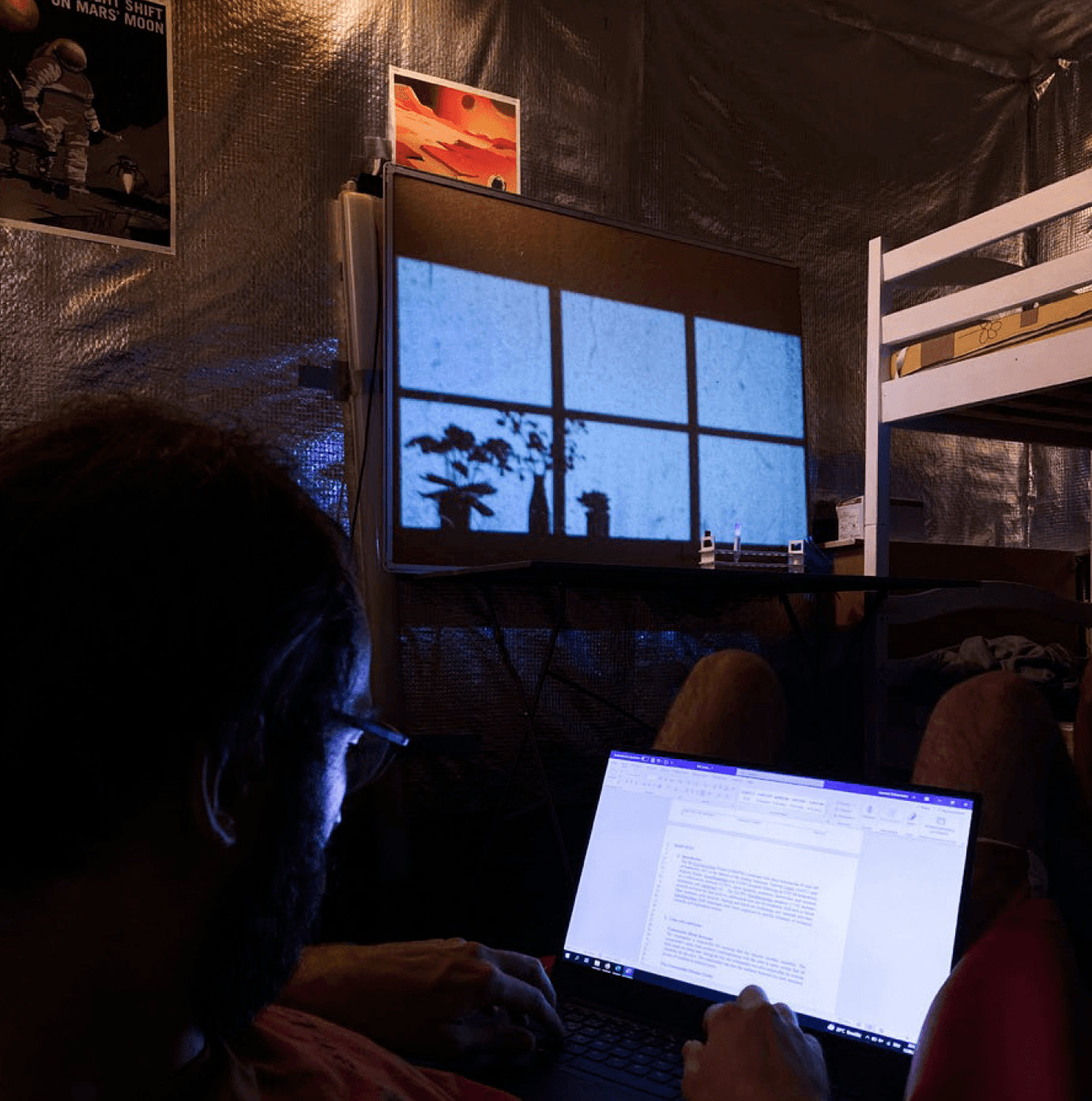
Three environmental scenarios — Countryside, Rainy, Marine — each combining light projection with circadian-synchronised colour temperature, ambient sound and natural fragrance. Tested during EMMPOL 8, a seven-day analogue mission in Poland, each scenario recreates the sensory experience of being outdoors inside a windowless, sunless habitat.
Can you recreate the feeling of being outside, inside a habitat with no windows and no natural light? The answer, tested over seven days in total isolation, was yes — but only if you combine the right stimuli. Light alone is not enough. Sound alone is not enough. Scent alone is not enough. Together, they create something the brain recognises as real enough to respond to. The more deprived the environment, the stronger the effect.
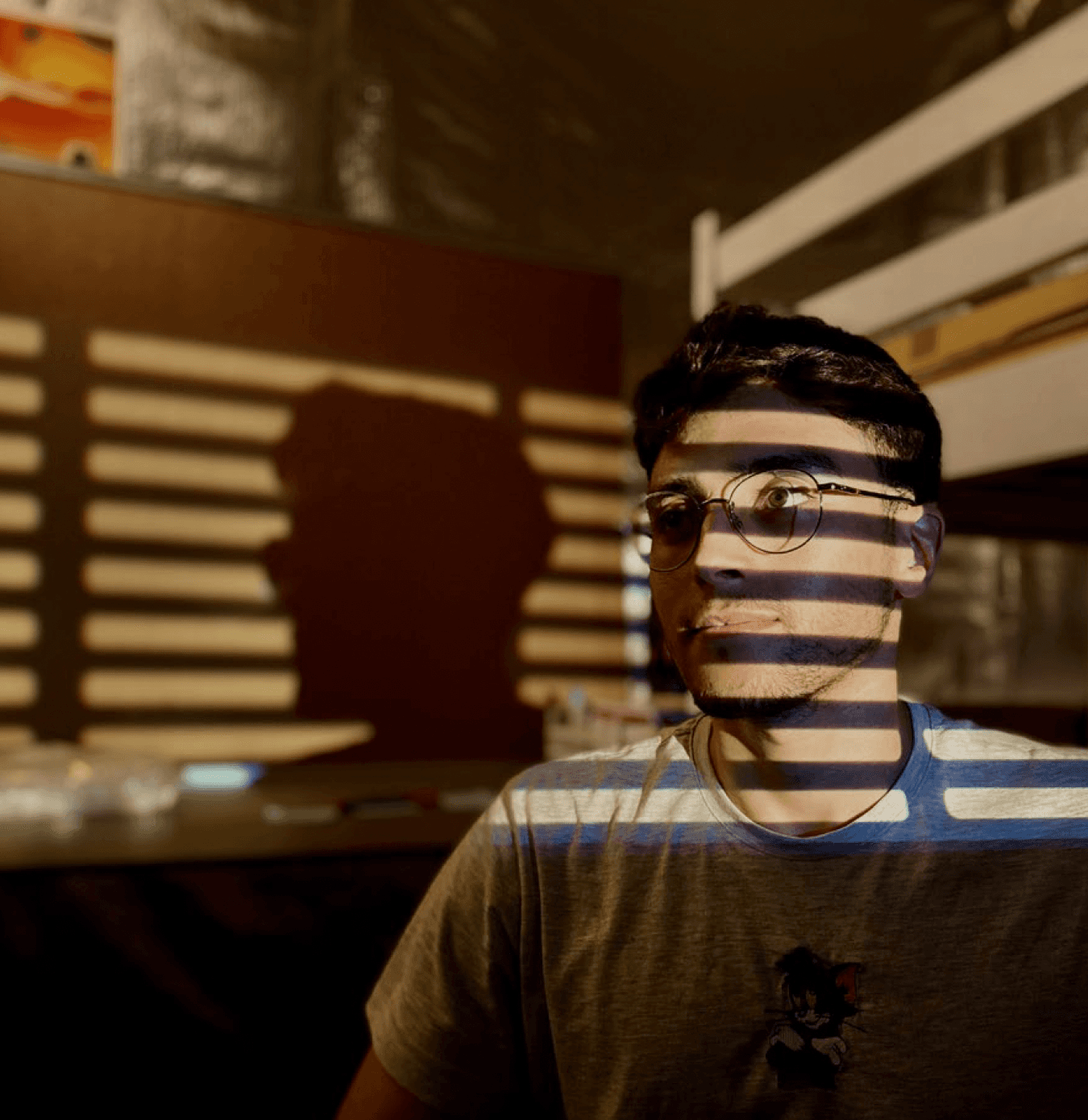
Each scenario combines three sensory dimensions: light projection with circadian-synchronised colour temperature, ambient sound recorded in natural environments, and natural fragrance. The combination was not accidental — the three stimuli reinforce each other, creating a perceptual effect greater than the sum of its parts. A secondary experiment tested food-related scents for their capacity to reduce boredom through surprise and familiarity.
The scenarios were not designed to simulate nature perfectly. They were designed to give the crew enough sensory cues to feel connected to something beyond the walls. As one crew member said during debriefing:
"You know it's not real, but you want it to be — and that's enough."
01
Research
The sensory gap in confined environments
Literature review on the effects of sensory deprivation in isolated environments — polar stations, submarines, space missions, pandemic isolation studies. Finding: the absence of natural stimuli is not just uncomfortable. It is measurably damaging to mood, cognitive performance and group cohesion.
02
Design
Rebuilding nature from its components
Three scenarios selected for their cross-cultural familiarity and emotional resonance: Countryside, Rainy, Marine. Each was designed around three sensory dimensions — light, sound and scent — chosen because they are the stimuli most directly associated with natural environments and most feasible to recreate in a confined habitat.
03
Field Validation
EMMPOL 8, Poland
Seven-day total isolation mission. No natural sunlight. Scenarios tested in real operational conditions — not a controlled lab setting but a real analogue habitat with all its constraints, noise and unpredictability. Methods: post-exposure surveys, structured interviews, field observation.
04
Results
What the mission revelead
Combined sensory stimuli consistently outperformed single-sense interventions. Extreme confinement amplifies the perceived effect of natural simulations — the more deprived the environment, the stronger the response to even partial sensory cues. Key insight: you don't need to recreate nature perfectly. You need to recreate enough of it.
year
2021
Client
Politecnico di Milano, Thesis Research

see also