Exospacehab-X
A physical prototype of a transportable Moon base, built for analogue missions and outreach
00
challenge
The project @Multiverso Hab demonstrated the potential of the analogue sharing model. But a concept needed to become a built reality. The question shifted: not how should it work, but how do you actually build it — with a real budget, real constraints, real partners, real users.
solution
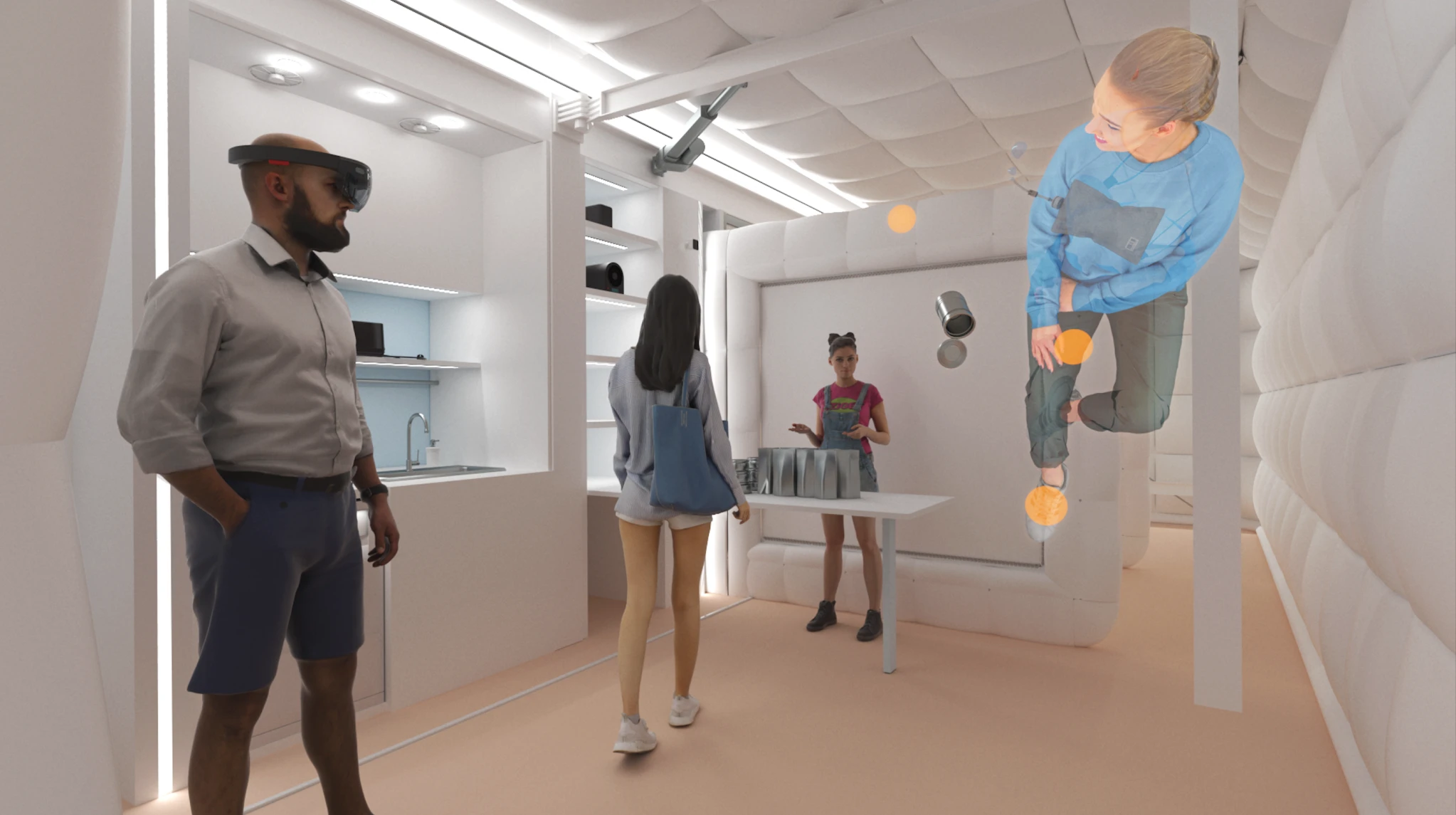
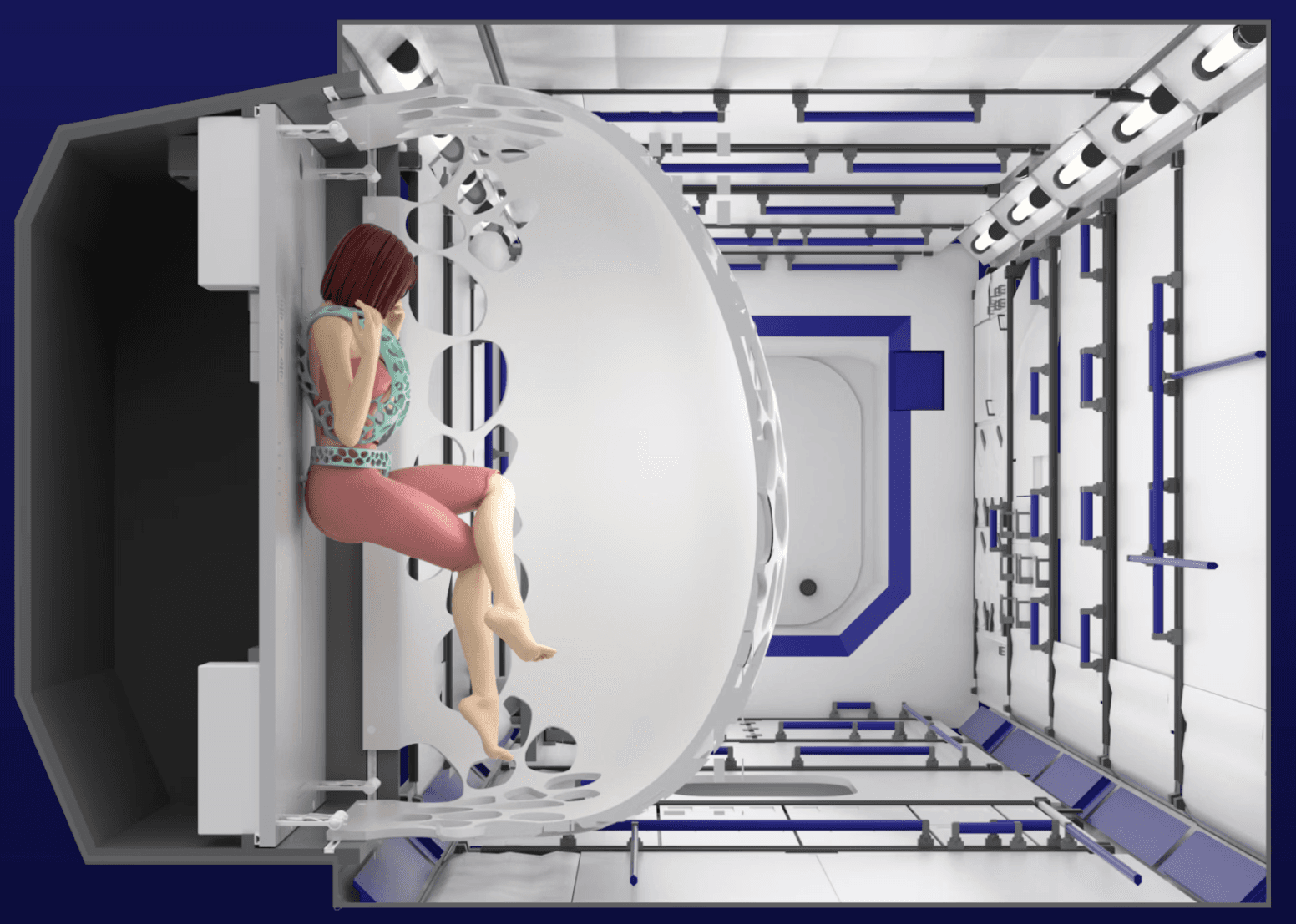
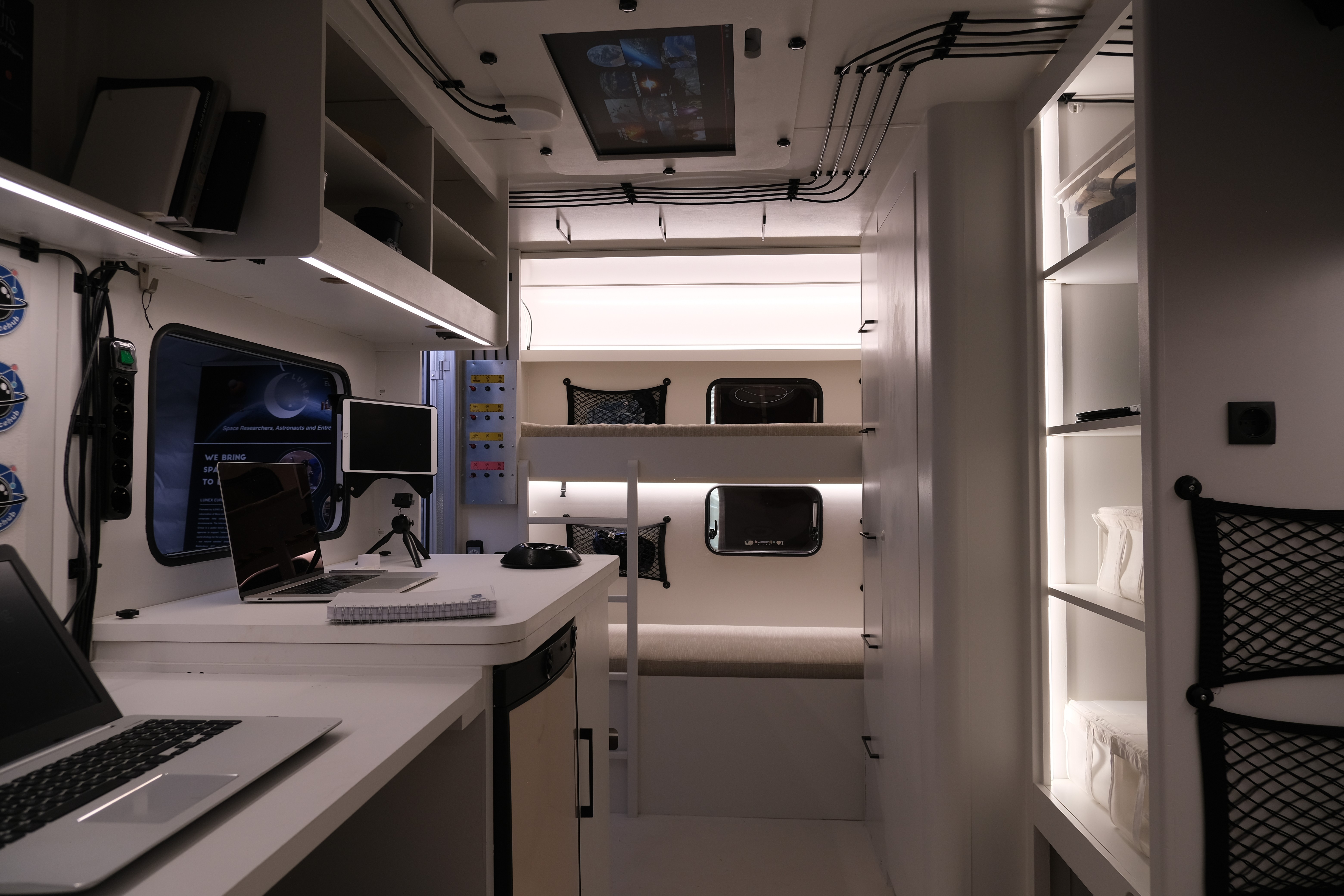
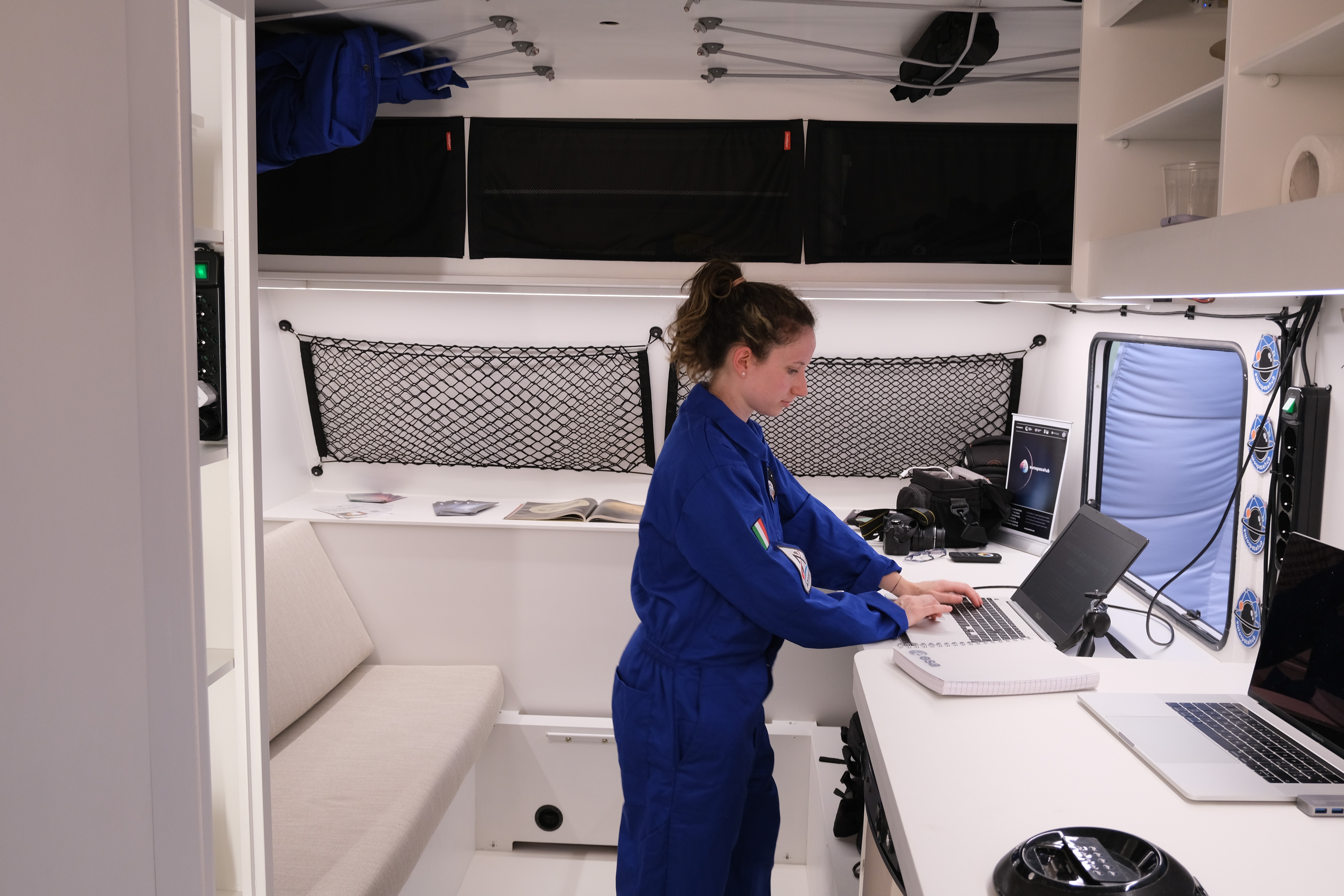
A hybrid habitat combining a modified Weinsberg 400LK caravan with a custom inflatable structure. The rigid module houses a galley, sleeping pods with individual RGB lighting, an ISS-style laboratory rack and a hygiene compartment. The inflatable serves as airlock for EVA simulations and reconfigurable outreach space. Every interior decision traces to a finding from one of three real analogue missions: EMMPOL8 2021 in Poland, EMMIHS 2023 in Hawaii and Venus Biogender Mission in Spain (2022).
Built January–May 2023 in the province of Monza Brianza. Presented at IAC 2023 Baku and European Lunar Symposium 2023 Padua. Now operational for analogue missions and outreach events across Europe. ExoSpaceHab-X proved that design intelligence applied to constrained systems can produce operational infrastructure accessible to diverse scientific and educational communities.
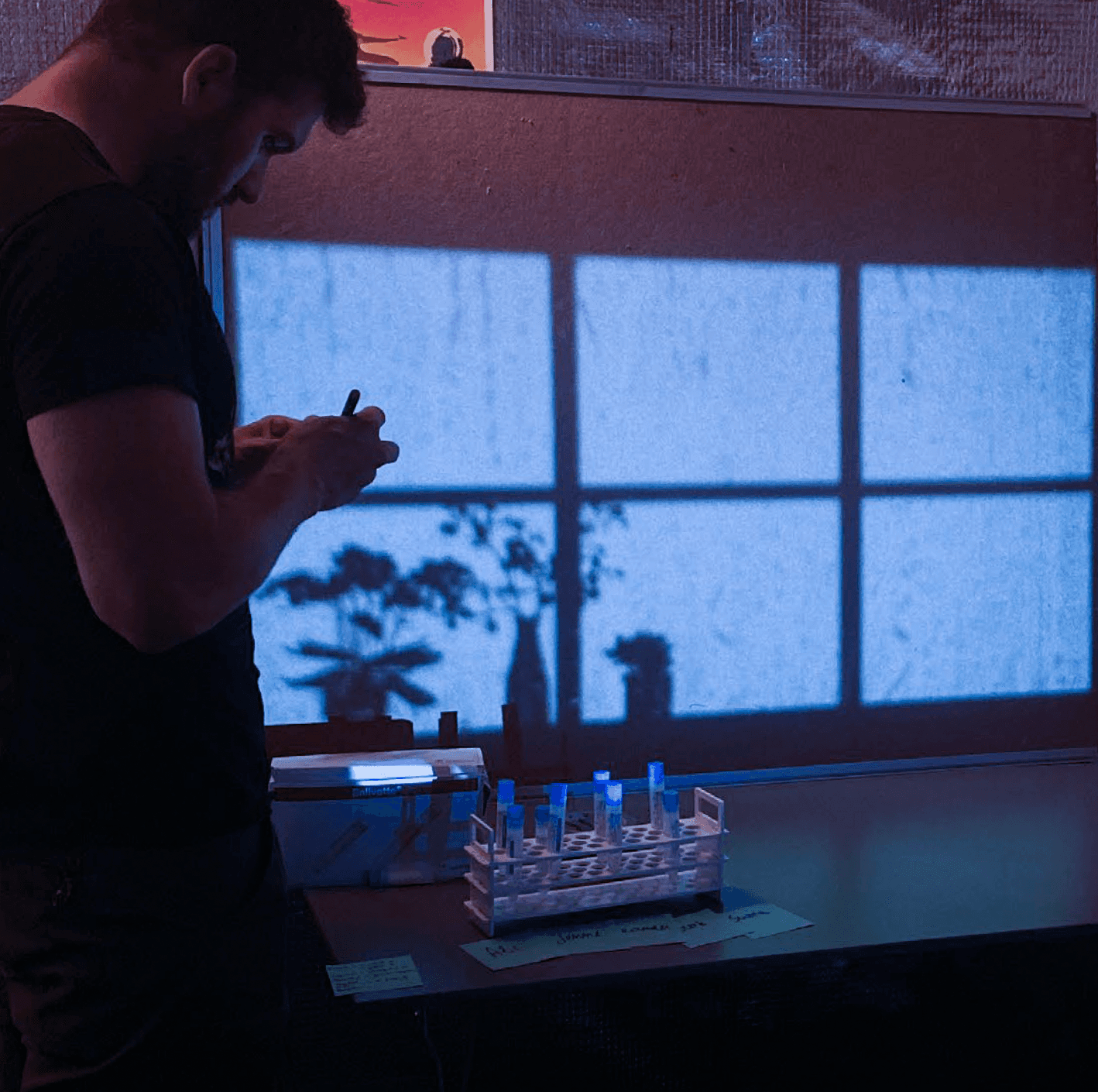
Three analogue missions provided the empirical foundation for the project. EMMPOL 8 in Poland: seven days of total isolation, no natural sunlight, focus on interior dynamics and crew psychology. The Venus Biogender Mission in Spain: an underground lava tube habitat, all-female crew, EVA operations in extreme geological conditions. EMMIHS 2023 at HI-SEAS in Hawaii: a Martian base simulation on volcanic terrain at 2500m altitude, with an intense EVA programme and live outreach operations with Earth. Photography from this mission was published in El Mundo Financiero, Infomag Espana and Periodico De Ibiza.
Each environment was different. Each generated findings that could only come from being there. The inflatable structure was manufactured by the company "Nasoallinsù" (Varese), balancing structural integrity, low weight, water resistance and rapid deployment. The lighting system by LEDPRO runs full-spectrum circadian simulation on 220V with emergency 12V mode on battery. The inflatable porthole functions as an EVA airlock — enabling protocol training without fixed pressurised infrastructure.
01
From concept to production brief
When the question shifts from "how should it work" to "how do we actually build it"
ExoSpaceHab-X inherited the requirements established through Multiverso Hab research and added one: it had to be built, not designed. The brief was a production specification, not an academic exercise. Everything that followed was constrained by real budget, real timelines and real partners.
02
Three missions, three environments
The field research that made every design decision non-negotiable
Before building anything, the research had to be lived. Three missions across three years, three different environments, three different types of constraint. Not case studies read at a desk — actual missions, with real crews, real operational pressure, real consequences when something didn't work. The findings that came out of them were not hypotheses. They were evidence. And evidence is what turns a concept into a specification.
03
Construction
Building the habitat
Construction ran January–May 2023. The caravan was modified with a galley, ISS-style rack, sleeping pods with individual RGB lighting and sliding privacy partitions. The inflatable structure was manufactured by Nasoallinsù — balancing structural integrity, low weight, water resistance and rapid deployment. The lighting system by LEDPRO runs full-spectrum circadian simulation on 220V with emergency 12V mode on battery. Every material choice, every dimension, every detail was driven by what the missions had taught.
04
Field validation
From workshops to operational: European Lunar Symposium Padua — and now in the field
ExoSpaceHab-X was presented at IAC 2023 in Baku and the European Lunar Symposium 2023 in Padua. It is now operational for analogue missions and outreach events across Europe — the first proof that the analogue sharing model works not just on paper, but in the field.
year
2023
Client
Lunex EuroMoonMars, EuroSpaceHub (EU-Funded project)


see also